Fill in your contactinformation to download the whitepaper

Whitepaper consent
Newsletter consent

Build to scale - Part 1: The team you build, builds the company

May 28, 2026 - Antwerp (BE)

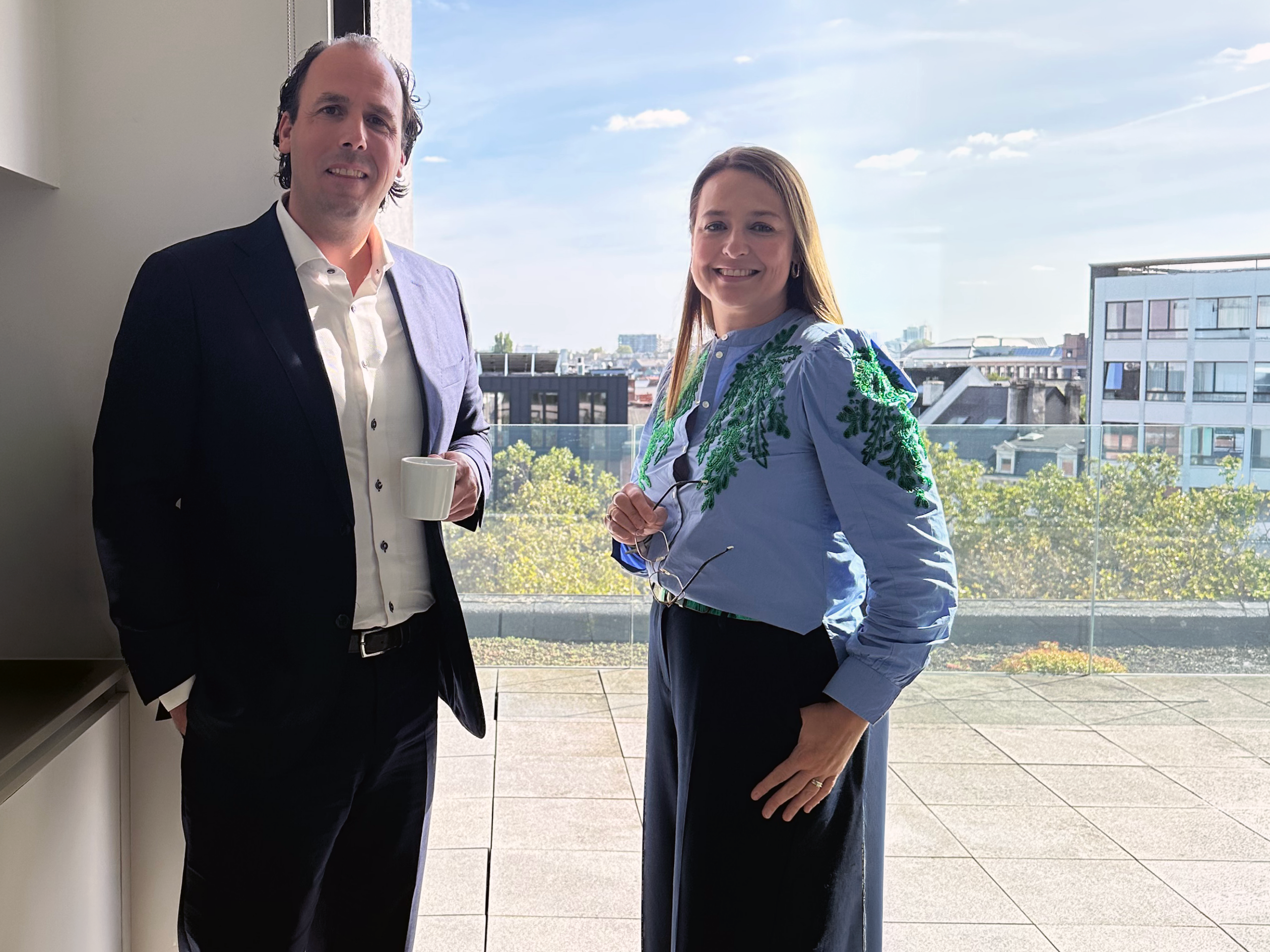
About the series – As a founder, you are the central point of your company’s journey. As your company grows, your role may change; you have a board to report to and new profiles are added to your team. How can you lead this journey and guide your company to growth? That’s a question Katleen Vandersmissen (Managing Partner at HERAN) and Jord Teeuwen (Managing Partner at QTC Recruitment) discuss in this series. Both know what it takes in terms of talent, but bring different views to the table: one brings the investor and director perspective, the other that of the executive search and talent advisory perspective. Different angles, same question: what separates the teams that scale successfully from those that stall?

IMG 3739


The team you build, builds the company

On your transition as a founder and the HR choices that shape your future

You started this company because of what you know. You will scale it because of who you hire and what choices you will make. Your team is what will drive your company's growth: the people you started with and the people you bring in next, the relationship you build with your investors, your board and recruiters. It’s the people around you who will make you and your company level up. Here’s how to choose them wisely.  

Why it’s essential to keep founders on board in their best role  

Almost every company in HERAN’s portfolio is founded by a technical expert: a scientist, an engineer, a clinician who saw a problem and couldn’t stop thinking about it. That’s exactly the kind of dedication HERAN invests in. But dedication to science and solving a societal or clinical problem is not the same as fluency in company building. What profiles are needed to successfully bring the product to market? 

“At some point, founders face a choice: stay on as CEO and evolve into a broader role, or stay close to the deeply embedded technical side and move into a CTO role.”

Katleen Vandersmissen
HERAN
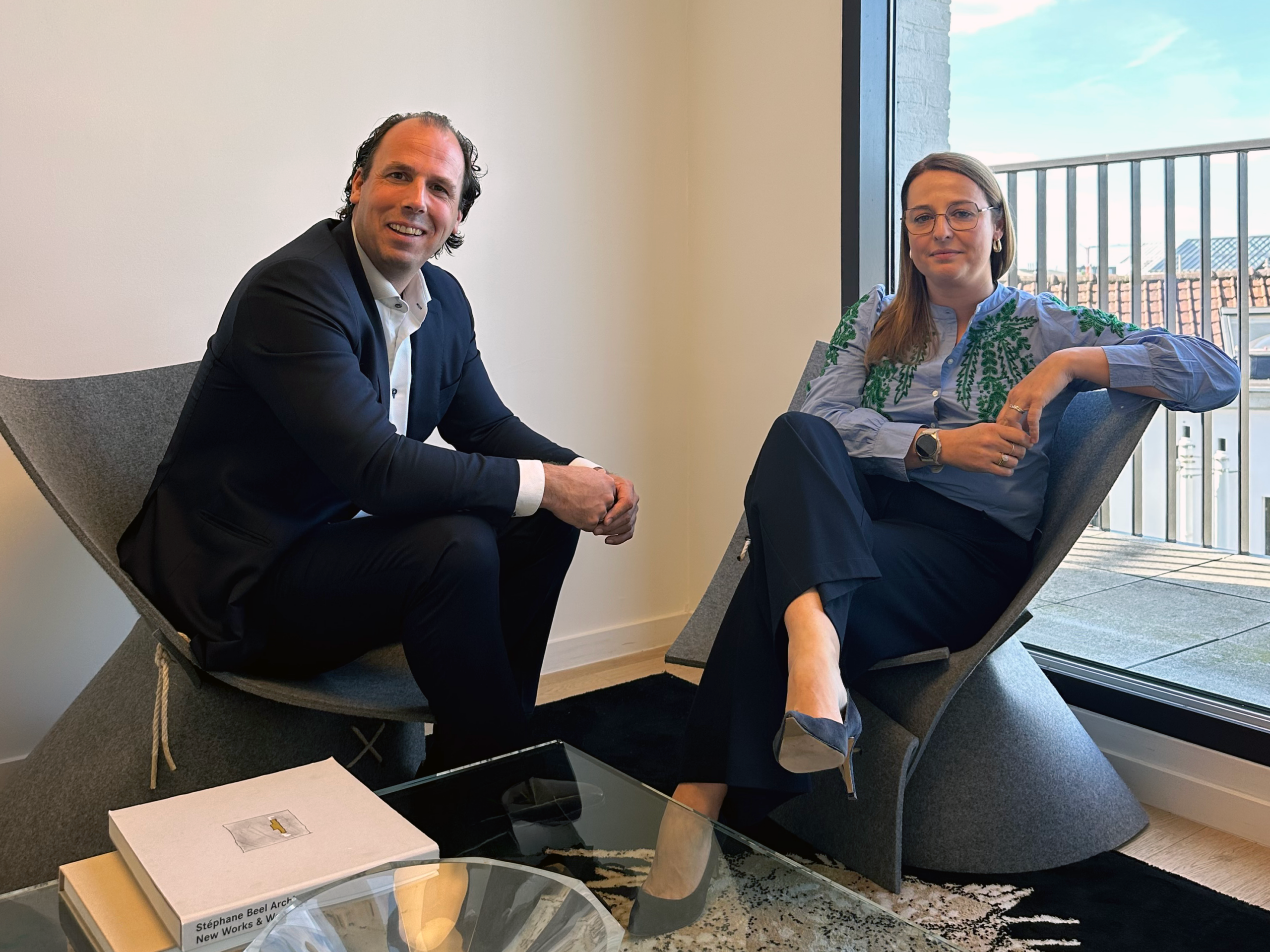
Katleen: ‘Founders usually know their product and first mover customers very well – it’s the implementation of a commercially scalable strategy that’s often a hiatus. It’s not about what to sell, but how to sell it. You need connections and skills. The biggest recruitment challenge for founders is adding profiles capable of tackling it. This could be a CCO or a business developer. Sometimes it’s the CEO. That all depends on the dynamics and technical aspects of the existing team. Can they let go of the technical details and move to a more overarching role? This determines whether we look for a new CEO with a commercial background or whether the founder can remain CEO and we look for commercial support. No matter the decision, it’s key to make this transition without losing the company's soul. We always want to keep the people who made the company close.’


Jord: ‘The founder started the company, but your company and you as a person do not grow in the same way. I call this the Pippi Longstocking effect: ‘I have never done this before, so I think I can do it.’ It’s a nice belief, until an investor joins the table, and the company is about more than just believing.’

The one quality that matters most in that moment? Adaptability.

Jord: ‘You need to grow through the different stages of your company’s life. Recognising and admitting the roles that are not your forte takes maturity and strength. It makes discussions with the board or co-founders easier and the transition to a new role smoother.’

Adaptability comes more naturally to some founders than others. But it’s essential to keep you, as a founder, on board; your position in and connection to the company are unlike anyone else’s.

Katleen: ‘When you transition into the role of CEO, you need to learn HR management, implement processes to scale and use commercial tools. This can feel uncomfortable at first, and some will react by outsourcing these tasks. Others will feel great doing them themselves. Both can be the right decision. As long as you make this important decision: either keep with the technical side and choose a more CTO-oriented function, or move to a CEA and thus more general role, which might mean letting go of what you really liked when you started the company. It takes a lot of self-knowledge to do the right thing.’

As a founder, you’re wearing multiple hats: you are not just an operator but also a board member and shareholder. Repositioning you affects operational and governance roles. This complexity is one of the reasons why the conversation about who the company needs to hire next is never easy. 

The right hire for each stage
The commercial hire

In the beginning of your company’s journey, you might be doing your sales yourself. It’s personal; you’re driven; you know your technical details and the value of your product. Founder-led sales work beautifully, until they don’t. To scale, a commercial and financial hire is almost always needed. How do you know when to start recruiting? 

Katleen: ‘Commercial hiring is the recruiting topic that draws the most attention for us; it’s also the one where most mistakes are made. When a company is in the stage we invest at, Seed or Series A, sales are usually still founder-led: highly technical, often relational, directed at people the founders know personally. The moment your business model demands scaling, you need an experienced salesperson by your side.’ 

Katleen & Jord

Jord: ‘That’s where a good recruiter makes the difference. An investor is always partial - as they invest in your company, there’s more at stake. But a recruiter can bring an external, comparative perspective without holding an equity position in the company. Going from a working prototype to selling ten thousand units is a discipline on its own.’ 

‘This is where the right commercial hire makes the difference. Don’t underestimate the sales cycle, the supply chain, the operational reality of scaling. The people who genuinely know how to do this usually have a lot of experience. However, put them in a six-person start-up and suddenly they not only have to write their own decks again, they are working in a smaller environment, with shorter communication lines and a more personal approach. It’s safe to think that they might just not like that. So it’s not just about the experience, but also whether they fit the stage the scale-up is in.’

Katleen: ‘These profiles that scale commercially are often optimistic, fast-moving and impatient with the technical specifics. This brings friction against the technical core of a young company. People stepping out of a large, structured organisation into the looser start-up environment often struggle with processes and with bringing a new product to market without the backing of a household name; this is a major difference in how to approach this. In a job interview, it's hard to tell whether the new hire will adapt. What you’re actually looking for is a hire with ‘corporate’ experience who wants to make a difference in a smaller environment. The most interesting profiles are the people who already realised that high-level is not the same as high-impact.’

“The most interesting profiles are the people who already realised that high-level is not the same as high-impact.”

Katleen Vandersmissen
HERAN
The financial hire

Once pipelines, forecasting, tough contract negotiations and growth assumptions are in play, the financial role becomes substantial. And here it’s also a matter of fitting the company more than fitting the job.

Jord: ‘We can find a CFO – the tricky part is to find one that likes to run payroll, keep the books, pick up some HR and probably own an IT implementation. What lands on their desks depends on the founder profiles and the CCO or CEO.'

Katleen: ‘It’s the CFO who gets the operational hurdles and needs to be a sparring partner for the CEO. That means: talking strategy, but also bringing reality checks. This makes it a hard hire in a small company. The person doing the forecasting is also the one processing expense claims. Cash, equity and bonus have to be calibrated and can create tension with founder compensation.’ 

Jord: ‘It helps to look at competencies and make your needs very tangible. What does the new hire really need to do? Sometimes you’ll conclude that you don’t need a CCO profile, but an account manager or a sales manager with ample experience in the local market. Or you can choose to hire someone who is ‘too big’ for your needs, but fits the company perfectly. There is no ‘one solution fits all’. But your one solution will make a big difference: there are deadlines and expectations. In an investment round, running behind nine months might be a real problem.’

Growth is built on trust

Building your first team is not the same as handing the company over to different people. The culture, the direction, the obsession with fixing a problem: these are the soul of the business, and they are intertwined with the people who started it. A leadership transition can drain a company of its energy when not handled correctly.

It is hard to see your own blind spots. This is exactly where investors and the board need to make a difference: not by judging from the sidelines, but by thinking along about what the company and the team need next.

Katleen: ‘As investors, we almost always have a mandate on the board. But we’re more than that: we have a relationship built on trust, and we are the mentor or partner of the founder. We want you to be successful, because we share in your success. We’re in it together  – for the long run.’

Jord: ‘After all, we’re all entrepreneurs. An investor like HERAN can also guide without using their formal mandate. Founders are intelligent enough to make the right choices. It’s when things are moving too fast or were not discussed beforehand that resistance or distrust can occur.’

Katleen: ‘When things go smoothly, there’s not a lot of discussion. But things rarely go smoothly in a start-up. When challenges arise, you need to be able to have the honest conversations too. Trust is essential here: it is what allows everyone to move forward together.’

That trust is why HERAN begins building a relationship with the founding team long before any investment is made. The first conversations are about more than technology; they are also a test of whether the investor and the founders can work together when things get hard.

Trust is also about knowing what the right decision is. From an HR perspective, it’s often about knowing the difference between adding and replacing.

Jord: ‘Adding knowledge to the team is easy. You don’t have the legal expertise, so you bring in someone who does. That’s a matter of capacity. Here, things might go wrong when you add the right knowledge but with the wrong profile for the stage you’re in.’

‘Replacing someone or assigning them a new role is a more emotional matter. It’s often framed as a matter of competence, while it’s a matter of stage. Someone might be doing an excellent job and still not be the right fit for the next stage of the company - especially when scaling up. This can bring friction or frustration. Make clear that it’s about combining the right timing with the right profiles. It makes the difference between a productive and an emotional transit.’

“Adding knowledge to the team is easy. Replacing people or assigning new roles is a more sensitive matter.”

Jord Teeuwen
QTC Recruitment
IMG 3723


Guarding the soul of the company

Replacing people on your team or moving into a new role yourself might also be difficult on an emotional level. How can you grow and still protect the soul of the company you built?

Jord: ‘Of course this is difficult. It’s like letting go of your baby. And when the first team is very close, you may mistakenly assume they are the perfect fit to lead your company's growth. From a business perspective, it is easy to replace them. But in reality, you and your first team are often the father or mother figures of the company. Replacing may have a serious impact.’

Katleen: ‘Some founders are indeed the face and the soul of the company. We want nothing more than to keep them in this central position. Sometimes we work around a situation to keep them in their current roles, even if replacing them might be objectively better, from a pure competence standpoint. We do what is the best available option at that moment, not only purely factual but also taking into account the company culture and drive: This is crucial for a start-up to thrive.’

“Starting something does not mean the company will automatically grow with you as a person. The thing that got you here is rarely the thing that gets you to exit.”

Jord Teeuwen
QTC Recruitment

So is there an in-between? A solution that keeps the soul of the business and yet dares to make the top-level changes that are needed for growth? Yes, there is, if you remember that you’re not safeguarding the soul by holding on to every role. You guard it by being clear about what you are protecting: the values, the standard, the type of company you want this to be. And by letting other people do the work in their own way, within the frame that you created.

Jord: ‘Our role goes beyond finding people. We help objectify the conversation around what the organisation actually needs at each stage of growth. Because we have seen how comparable companies have built and evolved their leadership teams, we can bring that external perspective into the room helping founders and boards make better talent decisions while staying close to the strengths that made the company successful in the first place.’

Katleen: ‘The perfect scenario combines facts with intuition. We often look at other companies or examples – experience and expertise do their work –, but there’s always that gut feeling that speaks too. The issue becomes discussable based on evidence and intuition.’

Key takeaways

Look for the turning point in the CV

The first commercial and financial hires are not the most senior names. They are the people who chose to leave a corporate role for a start-up environment because they value impact over status. 

Investigate your own adaptability

Understand that your role as a founder can change through the different stages of your company. Be honest about what roles suit you and which might not. 

Know the emotional difference between adding and replacing

Adding skills to the team is a capacity question, and a relatively easy one. Replacing people is a much harder conversation to have: one about finding the right fit for the right stage.